Bhagavad Gita 1.37
Chapter 1, verse 37
Meaning
“So we have no business killing Dhṛtarāṣṭra's sons; they are our own family. Mādhava, if we cut down our own people, how could we ever be happy again?”
Text note: The BORI critical edition reads sabāndhavān, “together with their relatives”; the traditional text shown here reads svabāndhavān, “our own relatives”. Either way the point is the same: these are kin.
The Sanskrit
तस्मान्नार्हा वयं हन्तुं धार्तराष्ट्रान्स्वबान्धवान् ।
स्वजनं हि कथं हत्वा सुखिनः स्याम माधव ॥ ३७ ॥
tasmān nārhā vayaṃ hantuṃ dhārtarāṣṭrān svabāndhavān
svajanaṃ hi kathaṃ hatvā sukhinaḥ syāma mādhava
Say it
tus-maan naar-haa vuh-yum hun-tum dhaar-tuh-raash-traan svuh-baan-dhuh-vaan
svuh-juh-num hi kuh-thum hut-vaa soo-khi-nuh syaa-muh maa-dhuh-vuh
Word by word
- tasmāt
- therefore
- na arhāḥ vayam
- it is not right for us
- hantum
- to kill
- dhārtarāṣṭrān
- Dhṛtarāṣṭra's sons
- sva-bāndhavān
- our own relatives
- sva-janam
- our own people
- katham … syāma
- how could we be
- hatvā
- having killed
- sukhinaḥ
- happy
- mādhava
- O Mādhava (Krishna)
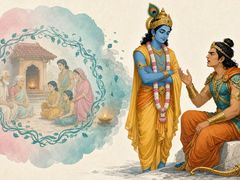 Read it in context: verses 1.37–40Arjuna argues for walking awayWith the story so far, commentary, and today's lesson: When the feeling comes first, the argument follows
Another translation and audio recitation: verse 1.37 on holy-bhagavad-gita.org.
Get the readings by email
The verses, the lesson and one thing to try. Free, and separate from new-comic alerts.
We'll ask you to confirm by email first. Unsubscribe from any email.