Bhagavad Gita 1.46
Chapter 1, verse 46
Meaning
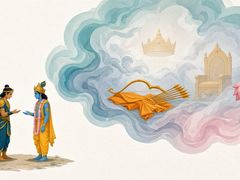
“If the sons of Dhṛtarāṣṭra, weapons in hand, were to cut me down in battle while I stood unarmed and did not fight back, that would be better for me.” He would rather be the victim than the one who acts.
The Sanskrit
यदि मामप्रतीकारमशस्त्रं शस्त्रपाणयः ।
धार्तराष्ट्रा रणे हन्युस्तन्मे क्षेमतरं भवेत् ॥ ४६ ॥
yadi mām apratīkāram aśastraṃ śastrapāṇayaḥ
dhārtarāṣṭrā raṇe hanyus tan me kṣemataraṃ bhavet
Say it
yuh-di maam uh-pruh-tee-kaa-rum uh-shus-trum shus-truh-paa-nuh-yuh
dhaar-tuh-raash-traa ruh-nay hun-yoos tun may kshay-muh-tuh-rum bhuh-vayt
Word by word
- yadi
- if
- mām
- me
- apratīkāram
- offering no resistance
- aśastram
- unarmed
- śastra-pāṇayaḥ
- with weapons in hand
- dhārtarāṣṭrāḥ
- the sons of Dhṛtarāṣṭra
- raṇe
- in battle
- hanyuḥ
- were to kill
- tat me
- that, for me
- kṣemataram bhavet
- would be the better outcome
 Read it in context: verses 1.45–47The bow is set downWith the story so far, commentary, and today's lesson: When the argument ends in sitting down
Another translation and audio recitation: verse 1.46 on holy-bhagavad-gita.org.
Get the readings by email
The verses, the lesson and one thing to try. Free, and separate from new-comic alerts.
We'll ask you to confirm by email first. Unsubscribe from any email.