Bhagavad Gita 2.15
Chapter 2, verse 15
Meaning
Finest of men, the steady person whom these sensations do not shake, who stays even in pain and in pleasure, is the one who becomes fit for the deathless state.
The Sanskrit
यं हि न व्यथयन्त्येते पुरुषं पुरुषर्षभ ।
समदुःखसुखं धीरं सोऽमृतत्वाय कल्पते ॥ १५ ॥
yaṃ hi na vyathayanty ete puruṣaṃ puruṣarṣabha
samaduḥkhasukhaṃ dhīraṃ so 'mṛtatvāya kalpate
Say it
yum hi nuh vyuh-thuh-yun-ty ay-tay poo-roo-shum poo-roo-shur-shuh-bhuh
suh-muh-doo-khuh-soo-khum dhee-rum so 'mri-tuh-tvaa-yuh kul-puh-tay
Word by word
- yam hi
- the one whom, indeed
- na vyathayanti ete
- these do not shake or torment
- puruṣam
- the person
- puruṣa-ṛṣabha
- O bull among men (finest of people)
- sama-duḥkha-sukham
- the same in pain and in pleasure
- dhīram
- steady, wise
- saḥ
- that one
- amṛtatvāya kalpate
- becomes fit for immortality
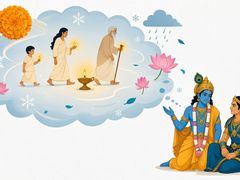 Read it in context: verses 2.13–16Childhood, youth, old age, and what staysWith the story so far, commentary, and today's lesson: Feelings are weather; you are the one standing in it
Another translation and audio recitation: verse 2.15 on holy-bhagavad-gita.org.
Get the readings by email
The verses, the lesson and one thing to try. Free, and separate from new-comic alerts.
We'll ask you to confirm by email first. Unsubscribe from any email.