Bhagavad Gita 2.6
Chapter 2, verse 6
Meaning
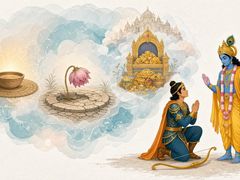
He goes on: we cannot even tell which outcome weighs more for us, that we win or that they win. The sons of Dhṛtarāṣṭra stand facing us, and they are the very people after whose death we would not want to go on living.
The Sanskrit
न चैतद्विद्मः कतरन्नो गरीयो
यद्वा जयेम यदि वा नो जयेयुः ।
यानेव हत्वा न जिजीविषाम-
स्तेऽवस्थिताः प्रमुखे धार्तराष्ट्राः ॥ ६ ॥
na caitad vidmaḥ kataran no garīyo / yad vā jayema yadi vā no jayeyuḥ
yān eva hatvā na jijīviṣāmas / te 'vasthitāḥ pramukhe dhārtarāṣṭrāḥ
Say it
nuh chai-tud vid-muh kuh-tuh-run no guh-ree-yo
yud vaa juh-yay-muh yuh-di vaa no juh-yay-yooh
yaan ay-vuh hut-vaa nuh ji-jee-vish-aa-muhs
tay uh-vuh-sthi-taah pruh-mook-hay dhaar-tuh-raash-traah
Word by word
- na ca etat vidmaḥ
- and we do not know this
- katarat naḥ garīyaḥ
- which of the two is heavier / better for us
- yad vā jayema
- whether we should conquer
- yadi vā naḥ jayeyuḥ
- or whether they should defeat us
- yān eva hatvā
- those whom, having killed
- na jijīviṣāmaḥ
- we would not wish to live
- te avasthitāḥ
- they stand / are stationed
- pramukhe
- in front / opposite us
- dhārtarāṣṭrāḥ
- the sons of Dhṛtarāṣṭra
 Read it in context: verses 2.5–8I am your student: teach meWith the story so far, commentary, and today's lesson: Stop arguing your case and ask to be taught
Another translation and audio recitation: verse 2.6 on holy-bhagavad-gita.org.
Get the readings by email
The verses, the lesson and one thing to try. Free, and separate from new-comic alerts.
We'll ask you to confirm by email first. Unsubscribe from any email.