Bhagavad Gita 2.18
Chapter 2, verse 18
Meaning
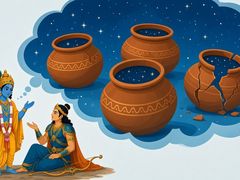
Bodies have an end. The one who lives in them is called eternal, imperishable and beyond measure. So, Arjuna, take up your duty and fight.
The Sanskrit
अन्तवन्त इमे देहा नित्यस्योक्ताः शरीरिणः ।
अनाशिनोऽप्रमेयस्य तस्माद्युध्यस्व भारत ॥ १८ ॥
antavanta ime dehā nityasyoktāḥ śarīriṇaḥ
anāśino 'prameyasya tasmād yudhyasva bhārata
Say it
un-tuh-vun-tuh i-may day-haa ni-tyuh-syok-taah shuh-ree-ri-nuh-h
uh-naa-shi-no 'pruh-may-yuh-syuh tus-maad yoo-dhyuh-svuh bhaa-ruh-tuh
Word by word
- antavantaḥ
- having an end, perishable
- ime dehāḥ
- these bodies
- nityasya
- of the eternal one
- uktāḥ
- are said to be
- śarīriṇaḥ
- of the embodied self, the one who has a body
- anāśinaḥ
- of the imperishable
- aprameyasya
- of the immeasurable, beyond measuring
- tasmāt yudhyasva bhārata
- therefore fight, O descendant of Bharata
 Read it in context: verses 2.17–20What no weapon can touchWith the story so far, commentary, and today's lesson: Not every ending is the end of you
Another translation and audio recitation: verse 2.18 on holy-bhagavad-gita.org.
Get the readings by email
The verses, the lesson and one thing to try. Free, and separate from new-comic alerts.
We'll ask you to confirm by email first. Unsubscribe from any email.