Bhagavad Gita 3.17
Chapter 3, verse 17
Meaning
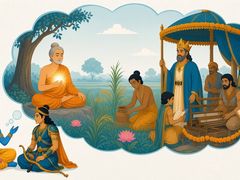
But someone whose delight is in the Self alone, who is fulfilled by it and content within it, has no task left that he is bound to do.
The Sanskrit
यस्त्वात्मरतिरेव स्यादात्मतृप्तश्च मानवः ।
आत्मन्येव च सन्तुष्टस्तस्य कार्यं न विद्यते ॥ १७ ॥
yas tv ātmaratir eva syād ātmatṛptaś ca mānavaḥ
ātmany eva ca saṃtuṣṭas tasya kāryaṃ na vidyate
Say it
yus-tvaat-muh-ruh-tir ay-vuh syaa-daat-muh-trip-tush chuh maa-nuh-vuh
aat-mun-yay-vuh chuh sun-toosh-tus tus-yuh kaar-yum nuh vid-yuh-tay
Word by word
- yaḥ tu
- but whoever
- ātma-ratiḥ eva syāt
- delights only in the Self
- ātma-tṛptaḥ ca mānavaḥ
- and is satisfied in the Self
- ātmani eva ca saṃtuṣṭaḥ
- and is content in the Self alone
- tasya kāryam na vidyate
- for him there is nothing that must be done
 Read it in context: verses 3.17–20Even the free still actWith the story so far, commentary, and today's lesson: Some of your work holds others up
Another translation and audio recitation: verse 3.17 on holy-bhagavad-gita.org.
Get the readings by email
The verses, the lesson and one thing to try. Free, and separate from new-comic alerts.
We'll ask you to confirm by email first. Unsubscribe from any email.