Bhagavad Gita 3.37
Chapter 3, verse 37 · śrībhagavān uvāca
Meaning
Krishna answers: it is desire, and it is anger, both born of rajas, the restless strand of nature. It devours endlessly, is never full and leads to great wrong. Know it as the enemy here.
The Sanskrit
काम एष क्रोध एष रजोगुणसमुद्भवः ।
महाशनो महापाप्मा विद्ध्येनमिह वैरिणम् ॥ ३७ ॥
kāma eṣa krodha eṣa rajoguṇasamudbhavaḥ
mahāśano mahāpāpmā viddhy enam iha vairiṇam
Say it
kaa-muh ay-shuh kro-dhuh ay-shuh ruh-jo-goo-nuh-suh-mood-bhuh-vuh-huh
muh-haa-shuh-no muh-haa-paap-maa vid-dhyay-nuh-mi-huh vai-ri-num
Word by word
- kāmaḥ eṣaḥ krodhaḥ eṣaḥ
- it is desire, it is anger
- rajo-guṇa-samudbhavaḥ
- born of rajas, the restless strand of nature
- mahā-aśanaḥ
- a great devourer, never satisfied
- mahā-pāpmā
- the source of great wrong
- viddhi enam iha vairiṇam
- know this to be the enemy here
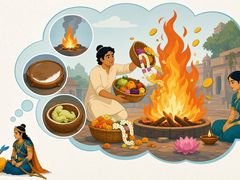 Read it in context: verses 3.37–40The fire that is never fullWith the story so far, commentary, and today's lesson: Feeding the fire doesn't fill it
Another translation and audio recitation: verse 3.37 on holy-bhagavad-gita.org.
Get the readings by email
The verses, the lesson and one thing to try. Free, and separate from new-comic alerts.
We'll ask you to confirm by email first. Unsubscribe from any email.